
Integrated indoor air quality
HVAC Air Purification for Commercial Buildings
Plan air purification as part of the HVAC system—not as an isolated device. True HVAC can help assess the air path, contaminants, filtration needs, treatment options, system compatibility and maintenance access for your building.
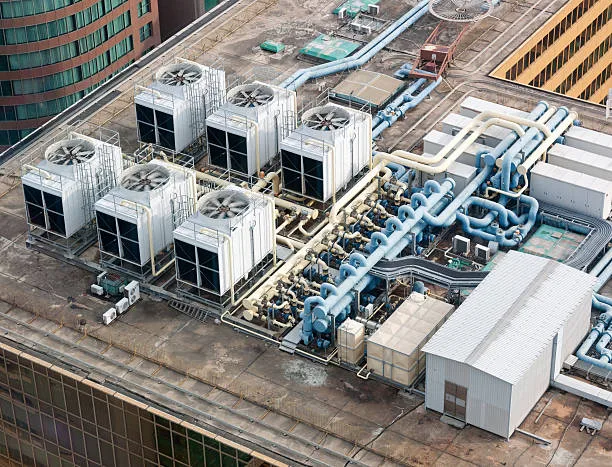
Particles
Dust, fine particulate matter and airborne debris.
Odours
Selected gases and odours where suitable media is used.
Microbial load
Technology-specific reduction under defined operating conditions.
Treatment options
Match the technology to the contaminant and the HVAC system
No single device addresses every indoor air-quality concern. The practical combination depends on the contaminant, airflow, pressure drop, equipment space, occupancy and maintenance plan.
Mechanical filtration
Filters capture particles as air passes through the system. Selection should balance filtration performance with airflow, fan capability and replacement frequency.
Activated carbon or sorbent media
Suitable media can help address selected odours and gases. The contaminant type, concentration, contact time and change-out plan matter.
UVGI treatment
Ultraviolet germicidal irradiation can be considered for suitable HVAC locations, with attention to dose, placement, shielding, airflow and lamp maintenance.
Ionisation and electrostatic collection
Ionisers or electrostatic precipitators may be evaluated for specific applications, along with by-product control, cleaning and compatibility requirements.
Duct inspection and cleaning
Deposits inside ducts can indicate a source, filtration or maintenance issue. Cleaning should be paired with measures that address the cause.
Maintenance and verification
Filters, lamps, collectors and media require accessible locations, inspection intervals and clear replacement or cleaning responsibilities.
Whole-building integration
Treat the air where the system can move, expose and maintain it effectively
In-duct or whole-building purification can use the existing HVAC air path, but the treatment stage must be compatible with the air-handling unit, fan capacity, controls and available service space.
The design should also consider bypass leakage, filter sealing, access doors, safe maintenance, condensate, electrical supply and how the selected component affects system resistance.
- 01Source & return air
Identify where contaminants enter or are generated.
- 02Pre-treatment
Protect downstream components and manage larger particles.
- 03Selected treatment
Apply filtration, sorbent, UVGI or another suitable stage.
- 04Supply distribution
Deliver treated air without creating unacceptable airflow loss.
- 05Inspection & upkeep
Track loading, cleanliness, lamp life or media condition.
Selection guide
Start with the target, then test system compatibility
This table is a planning aid. Final equipment and performance requirements should be defined for the actual space, air-handling system and operating conditions.
| Primary target | Common approach | Questions to resolve |
|---|---|---|
| Dust and particles | Mechanical filtration | Particle size, filter efficiency, pressure drop, sealing and replacement interval. |
| Odours or selected gases | Activated carbon or other sorbent media | Contaminant type, media capacity, contact time, humidity and change-out method. |
| Microbial control objective | UVGI in a suitable location | Target, dose, exposure time, placement, shielding, airflow and lamp maintenance. |
| Fine-particle collection | Electrostatic collection or ionisation where appropriate | Collection method, by-products, cleaning, controls and compatibility with occupied spaces. |
| Duct deposits | Inspection, cleaning and source correction | Deposit type, access, contamination source, filtration condition and recurrence prevention. |
System thinking
Air purification works best as one layer of an indoor air-quality plan
Equipment selection should sit alongside ventilation, source control, housekeeping, moisture management and a maintainable operating plan.
Control the source
Reduce contaminant generation or entry where practical before relying on downstream treatment.
Manage ventilation
Review outdoor air, exhaust, pressure relationships and the way air moves between zones.
Select treatment
Choose components for the stated target and verify that the HVAC system can accommodate them.
Maintain performance
Define inspections, cleaning, replacement, records and safe access before the system is handed over.
Project sequence
From air-quality concern to maintainable HVAC solution
A defined assessment helps prevent a technology-first decision that overlooks airflow, pressure drop, access or the actual contaminant source.
-
01
Define the concern
Record the space, occupancy, activities, symptoms, visible deposits, odours, outdoor-air conditions and operating schedule.
-
02
Review the HVAC system
Check air-handling equipment, duct routes, airflow, filters, fans, controls, fresh-air and exhaust arrangements.
-
03
Select and integrate
Choose compatible treatment stages, locations, sealing, electrical interfaces, access and control requirements.
-
04
Set the upkeep plan
Document inspection, cleaning and replacement tasks using operating conditions and manufacturer guidance.
Frequently asked questions
HVAC air purification questions
System suitability and performance depend on the selected technology, installation details, airflow and maintenance. These answers provide a practical starting point.
What is HVAC air purification?
HVAC air purification uses treatment components within or alongside the heating, ventilation and air-conditioning air path. Depending on the target, the system may use mechanical filtration, sorbent media, UVGI, ionisation, electrostatic collection or a combination.
Can air purification be added to an existing ducted HVAC system?
It is often possible, but the existing system should first be checked for available space, airflow, fan capacity, pressure drop, access, electrical supply, controls and the condition of current filters and ducts.
Which HVAC air-purification technology is best?
There is no universal best option. Mechanical filters address particles, sorbent media can target selected odours or gases, and UVGI or electrostatic methods may suit specific objectives. Selection should start with the contaminant and system constraints.
Does air purification replace ventilation?
No. Purification is one layer of indoor air-quality control. Outdoor-air supply, exhaust, source control, pressure relationships, moisture management and routine cleaning still need to be addressed.
Can an HVAC system reduce airborne bacteria or viruses?
Some filtration and UVGI approaches are designed to reduce selected airborne microorganisms under defined conditions. Results depend on capture efficiency, dose, exposure time, airflow, installation quality and maintenance, so the objective must be specified rather than assumed.
How often should filters or purification components be serviced?
The interval depends on contaminant loading, operating hours, component type, environment and manufacturer guidance. The system should have an inspection-based schedule and clear indicators for cleaning or replacement.
Assess before selecting
Plan an air-purification solution around your building and HVAC system
Share the space type, current equipment, air-quality concern, operating hours and any available drawings with True HVAC.